Researchers at Massachusetts General Hospital (MGH) are investigating a new way to block replication of hepatitis C virus “HCV” by targeting not the virus itself, but the genes that the virus exploits during its life cycle.
HCV has a high rate of replication that it can replicate a trillion particles per day. Also, due to its high rate of mutation, it can escape our immune system.
HCV replicates mainly within hepatocytes in liver by binding to receptors on the surface of the liver “CD81″ and human scavenger receptor class B1 “SR-BI”. Then it utilizes the intracellular machinery necessary for its replication.
Transmission occurs by blood to blood contact, where it causes chronic liver infection in about 70-80% of patients & long term infections can cause liver failure or liver cancer.
HCV infection is usually treated with a six to eleven month regimen combining peginterferon and the antiviral drug ribavirin, but unfortunately, treatment is not successful in many patients and has serious side effects that some cannot tolerate.
Many drugs target viral enzymes, but due to the great ability of HCV to mutate, such approach lead to the emergence of resistant strains.
Recently, a new strategy has developed, which is to block human genes, which act as a cofactors for HCV infection. Using small interfering RNAs (siRNAs), researchers examined blocking of approximately 21,000 predicted messenger RNA transcripts in the human genome.
The siRNA scan found 96 genes that appear to have a role in viral replication, one gene codes for an enzyme called PI4KA, which is believed to be involved in the formation of membrane structures within the cell. Another group of genes contribute to formation of the coat.
So, by blocking these genes, HCV replication is stopped. At this time, these tested agents might not be suitable for therapeutic use.
Source & Image credits : Harvard Science.
Tags: blood contact, CD81, HCV, hepatocytes, Massachusetts General Hospital, peginterferon, PI4KA, ribavirin, siRNAs, SR-BI
 3 Comments »
Seriously, these days, no matter where I turn to, there is somebody contracting some form of bacterial infection that turns out to be pretty serious. At the beginning of the new year, a 20-year-old perfectly fit Brazilian model died of what appeared to be a Pseudomonas aeruginosa infection. As far as I know, polymyxins should work like a charm. Sadly, her life ended after enduring the amputation of her limbs and a nephroectomy procedure in an attempt to save her. And now again, rumor has it that Michael Jackson contracted a MRSA infection following a nose job.
Where did the antibiotics go? Is the bacterial resistance way ahead of us that we can’t even keep up? In a field study conducted amongst fellow neighbors & relatives, many did infact admit that they go rushing to their local pharmacies demanding a prescription of antibiotics for a mild flu or a fever of 38 degrees. Not that that is worse enough, they don’t comply to the pharmacist’s orders “if he did infact give an order” to administer it for the full course of the medication.
This should be a warning sign…an alarm triggering off right about now. Developed countries are already facing these problems, we shouldn’t be lingering around. Public awareness campaigns, maybe similar to those concerning the bird flu being aired these days, ought to be held. Our community is in desperate need of our expertise to guide, inform, and advise them about the consequences and potential threats at stake here.
“The window is closing and we’re coming to the end of the antibiotic era,” said J. Glenn Morris Jr., M.D., who heads the division of hospital epidemiology at the University of Maryland School of Medicine, College Park, MD. This was in 1999.
Can we really beat antibiotic resistance? or are bacteria getting the best of us?
Tags: bacterial resistance, brazilian model, c8bcf5c0dc8cfaa24f17995e7625c2b0, michael jackson, MRSA, pseudomonas
1 Comment »
Despite great advances in cancer therapy, conventional therapies are still implementing drawbacks and dilemmas that drives cancer research to consider other strategies to overcome the drawbacks implicated by conventional cancer therapy. The cancer treatment using anticancer agents possesses many adverse events related to bone marrow suppression and death of other rapidly proliferating cells is resulting from the either of the two following reasons:
- The narrow therapeutic index of anticancer agents that is in many cases hard to adjust with the inter-individual Pharmacokinetic &/or pharmacogenetic variation among cancer patients.
- The lack of specificity in most of anticancer agents systemically administered where anticancer agents kill both tumor cells and healthy cells.
Both of the above facts driven cancer therapy research in to many different aspects in the hope of optimizing the therapy & providing new techniques to get over the drawbacks of conventional therapy; The pharmacokinetics & /or pharmacogenetics, gene therapy in addition to the targeting therapy including the nanotherapy.

Professor Mostafa El Sayed was awarded the 2007 US National Medal of Science for his huge contribution in the field of nanotherapy in cancer as a molecular targeting approach that overcomes side effects of conventional cancer therapy. The idea lies in two main aspects: The first is molecular targeting & the second is photothermal destruction of malignant cells. The technique encompasses injecting gold nanoparticles conjugated with anti- Epidermal Growth Factor Receptor “anti -EGFR” monoclonal antibody , where the anti-EGFR is responsible for the the specific targeting which is molecularly based on the fact that epithelial carcinoma cells, particularly over-expresses “EGFR”. Regarding the tumor cidal effect it is mainly dependent on the photothermal destruction which is the role of the laser beam & gold nanoparticles, where particular nano size of gold makes it able to absorb light in Near Infra Red Region , which is the region where optical penetration is optimal & scatter laser beam and convert the light energy to thermal energy that is able to damage cell membrane and release the digestive enzymes and hence the death of cancer cells.
Image credit: www.gatech.edu
The choice of the laser light is a matter of the cancer location , where in case of cancer under the skin, Near Infra Red “NIR” laser light is recommended for its larger penetration depth. Gold particles are especially used because they are easily bioconjugated & they served as photoabsorbers due to overlap of absorption band of their specific nanosize with with argon laser beam. The gold nanoparticles are having a silica core and a gold shell & their absorption in the NIR is tuned by adjusting gold layer thickness as well as the size of silica core.
The pioneering success of the technique has been proved effective upon accumulation of Anti-EGFR antibody conjugated gold nanoparticles selectively in carcinoma cells and survival of benign cells as demonstrated by microscopic pictures of both benign & cancer cells as follows:
Gold nanoparticles are concentrated in cancer cells. “Pic 1”
Image credit: www.gatech.edu

Gold nanoparticles are not retained in benign cells. “Pic 2”
Image credit: www.gatech.edu
References:
- Ivan H. El Sayed, Xiaohua Huang, Mostafa A. El Sayed, ” Selective laser Photo-thermal therapy of epithelial carcinoma using anti-EGFR antibody conjugated gold nanoparticles”, Cancer Letters 239 (2006) 129-135.
- Erin B. Dickerson, Erick C. Dreaden, Xiaohua Huang, Ivan H. El Sayed,Hunghao Chu, Sujatha Pushpanketh, John F. Mcdonald, Mostafa A. El Sayed, ” Gold nano assiated near-infrared Plasmonic Phototheramal Therapy (PPTT) of squamos cell carcinoma in mice”, Cancer Letters 269 ( 2008) 57- 66.
Tags: adverse events, anticancer, argon laser, bone marrow suppression, cancer, Epithelial Carcinoma, Gene Therapy, laser, Molecular targetting, monoclonal antibody, nanotherapy, narrow therapeutic index, Pharmackinetic, pharmacogenetic, Photo-Thermal Destruction, Professor Mostafa El Sayed
4 Comments »
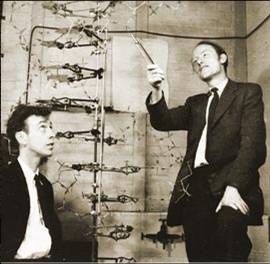 On February 28, 1953, James Watson and Francis Crick announced to their friends that they have discovered the chemical structure of the DNA. After publishing their paper in Nature on April 2, the official announcement took place on April 25. On February 28, 1953, James Watson and Francis Crick announced to their friends that they have discovered the chemical structure of the DNA. After publishing their paper in Nature on April 2, the official announcement took place on April 25.
That is what I have read in Al-Ahram newspaper today. What a discovery! Imagine if they had not done it, we would have had no clue about genes & protein synthesis, no recombinant DNA tech- & no sequencing. We would have had no molecular biology departments in universities! Abby from NCIS & Greg from CSI would have had no job!
So, what was the real story? To what extent are the “rumors” saying that Rosalind Franklin is the real discoverer of the DNA double helix right? Is she really the “Dark Lady of DNA”?
I hope we can get the story through your comments after we read this:
1- Crick papers from the National Library of Medicine.
2- Watson’s interview with a group of top North Carolina high school students in 2003.
3- BBC celebrating the 50th anniversary of DNA structure discovery in 2003. (really interesting)
4- Rosalind Franklin: Dark Lady of DNA by NPR (National Public Radio)
Image credits:
Watson – Crick DNA model: http://www.cs.princeton.edu/
Rosalind Franklin: http://www.npr.org/
Tags: 1408f278d2a6f884de58c0c44b7a6af7, DNA, Francis Crick, James Watson, Rosalind Franklin
No Comments »
Streptococcus pneumoniae is a pathogen normally found in nasopharynx of about 5-10 % of healthy people. Despite its name, it can cause many other diseases as meningitis, septic meningitis, otitis media, & osteomyelitis.
S. pneumoniae main virulence factors are:
a) Polysaccharide capsule: that inhibits phagocytosis.
b) Pneumolysin: a protein that causes lysis of host cells & activate complement.
c) Hydrogen peroxide: causes damage to host cells.
d) Pili: contribute in colonization of upper respiratory tract and increase the formation of large amounts of TNF.

Researchers led by Jesús M. Sanz at the Miguel Hernandez University and Maarten Merkx at the Eindhoven University of Technology have now introduced a highly promising new approach for the development of drugs to treat pneumococci.
The cell wall of pneumococci contains special polymers, called teichoic acids that are rich in choline which act as a docking station for a number of special proteins that are involved in important processes as:
1) Cell wall division.
2) Release of bacterial toxins.
3) Adhesion to infected tissues.
If choline is added to a culture of pneumococci, the molecules occupy the choline binding sites of the CBPs so that the proteins can no longer bind to the cell walls of the pneumococci.
The bacteria continue to multiply but they can’t separate from each other, these results in long chains of linked cells. Also, the toxin released is stopped.
However, choline is not suitable to be used as a drug because an effective dose would be far too high.
The researchers thus developed the foundation for a new drug that binds CBP much more strongly than individual choline molecules. The drug imitates the choline architecture of the cell wall by presenting multiple choline groups. This will occupy multiple choline binding sites of the CBP.
Also, the required dosage of this CBP inhibitor lies within the range that is acceptable for pharmaceuticals.
Source: Science Daily.
Image credits: S.pneumoniae.
Image credits: S.pneumoniae.
Tags: CBPs, choline binding sites, meningitis, osteomyelitis, otitis media, pili, Pneumolysin, Streptococcus pneumoniae, teichoic acids, TNF
1 Comment »
 If you try to search in the library or over the internet for AIDS, you will find a huge amount of information available. You will also figure out that all scientists reach a dead end at the step of treating or vaccinating against AIDS. Their stop makes you never stop thinking: why can’t they continue? Why is there no cure for such a disease? Or at least why can’t they stop the progress of this illness by simply making a vaccine? It is like reading the same book millions of times without understanding its end, then you re-read the last chapters but still “YOU CAN’T”!! If you try to search in the library or over the internet for AIDS, you will find a huge amount of information available. You will also figure out that all scientists reach a dead end at the step of treating or vaccinating against AIDS. Their stop makes you never stop thinking: why can’t they continue? Why is there no cure for such a disease? Or at least why can’t they stop the progress of this illness by simply making a vaccine? It is like reading the same book millions of times without understanding its end, then you re-read the last chapters but still “YOU CAN’T”!!
I think that we need to restart reading the book from its beginning. We need to re-read about the origin of AIDS infections, to know more about HIV genome, and how its genes function; then we may know how to slow down or terminate progression of the virus inside the human body or at least to stop its passage from an individual to another. Hence, we may be able to read the book again and this time we can understand its end.
AIDS was initially reported on June 5th, 1981. But, it is more precise to mention the first documented AIDS case, which was in 1959. At that time, no one was able to define such an illness; however, scientists did a favor for the humankind by preserving the infected tissues till someone would be able to define HIV, i.e. after 1981. I may ask why not before 1959? But who can answer a question like this?
The origin of AIDS has so many controversial theories, including conspiracy theories. One of these is that HIV arose as a result of leakage in the US governmental or military labs during the development of a biological weapon. You may ask Dr. Leonard G. Horowitz (the author of Emerging Viruses: AIDS & Ebola. Nature, Accident or Intentional? And Death in the Air: Globalism, Terrorism and Toxic Warfare) for evidence to prove such an idea. As wikipedia page of ” AIDS origins opposed to scientific consensus” mentions his theory which claims that AIDS virus was engineered by such U.S. Government defense contractors as Litton industries for the purposes of bio-warfare and “population control”.
Dr. Alan Cantwell (the author of AIDS and the Doctors of Death) supported this theory, by naming one scientist that led the US military research on homosexual and bisexual men between 1979 and 1981; he attributed these research activities to Dr. Wolf Szmuness. And, when Dr. Alan was asked about the cases that were reported before 1979, his answer was that the American media masked the truth at that time! This has been also mentioned on “AIDS origins opposed to scientific consensus” Wikipedia webpage.
Another unreliable hypothesis had been advanced by Edward Hooper, as he accused Hilary Koprowski, the polish virologist and immunologist who was preparing polio vaccine using tissue cultures from non-human primates during 1950s, that he might have transferred AIDS from monkeys to human. This idea couldn’t be evidenced when one of these vaccine vials had been checked in 2000 to show negative HIV or SIV (Simian immune-deficiency virus that infects chimpanzees). Also, by checking the protocols of that old research, it is clear they were working on monkeys’ kidney cells that cannot transmit AIDS. But can one negative vial become a prove for the whole negativity?!
The most accepted and recent theory assumes that HIV is an evolution from SIV. This Cameroon Chimpanzees theory was suggested in 2006 after a study on genetic samples from more than 1300 chimpanzees within 7 years by Dr. Beatrice Hahn. It seems that one person had been bitten by one of these apes or got cut while he or she was trying to slaughter one of these animals, maybe for eating purposes!!
If this Chimpanzee in the picture is the main suspect now for HIV triggering on earth, the question now is: Do we have current reports for the same transmission from apes to human? If yes or no, I think we need to re-study and search that SIV which might tell us something about its “daughter” HIV (as accepted by most of the scientists). It is like reading the book from its beginning not the last chapters, sure it will tell us new things.. Like what? I really dont know, it may be like the first idea that led to inventing the nuclear bomb, would you believe me if I told you more than 60 years ago that there is an idea to bombard the nucleus to make a huge bomb? It was just an idea, but the know how was not known. I think it is the same for the AIDS book: we need to re-read but we still don’t know what is going to happen after that reading. All I know that we need to re-read with a new vision, not the same ordinary way of reading.
Image credits: http://upload.wikimedia.org/wikipedia/commons/8/8d/South_Djoum_Chimp.jpg
Tags: AIDS, AIDS origin, Cameroon Chimpanzees hypothesis, Consiperasy Theories, conspiracy theories, Dr. Alan Cantwell, Dr. Beatrice Hahn, Dr. Leonard G. Horowitz, Dr. Wolf Szmuness, Edward Hooper, Hilary Koprowski, HIV, SIV
7 Comments »
Hello, hello. You’re now tuned to your favorite blog: micro-writers.egybio.net. Tonight we have this very special guest, live, online. After two months of waiting, we finally got this exclusive interview with the emerged Streptococcus pyogenes strain, the most dangerous ever, M1T1. We have it here, with us, in the studio.
– Hello, M1T1. Welcome in our studio.
– Hey there.
– We knew from our resources, which are totally classified, that you got yourself in trouble recently.
– (Interrupting), I did NOT get myself in trouble. EID set me up.
– M1T1, Would you please calm down & tell us a little more about yourself?
– Well, I belong to Group A streptococci (GAS) aka Streptococcus pyogenes. M1T1 is my serotype; I’m just a clonal strain. As you know, S. pyogenes colonize human skin & throat causing either non-invasive (sore throat, tonsillitis & impetigo) or invasive (necrotizing fasciitis NF, scarlet fever & streptococcal toxic-shock syndrome STSS) infections. Actually, NF gave me my nick: Flesh-eating bacteria.
– So, you cause all people NF & STSS?
– No, kid. It depends on their genetic susceptibility, what you call “Host–pathogen interactions”. I was isolated from patients with invasive as well as non-invasive infections during 1992–2002. This is NOT entirely my fault; humans can make me extra virulent by selecting the most virulent members.
– Back to your history, when have you exactly been isolated?
– M1 & her sisters were the worst nightmare in US & UK in the 19th century as they caused the famous pandemic of scarlet fever. “Nevertheless”, early 1980s was the golden age of my strain as well as my very close sisters M3T3 & M18. We caused STSS & NF in different parts of the world. Great times, great times!
– Only for you, I suppose! So, what made you hypervirulent? What caused you this “epidemiologic shift”?
– Two reasons Dr Ramy K. Aziz identified that improved my fitness to humans: the new genes I got from phages & “host-imposed pressure”. Both resulted in the selection & survival of me M1T1 the hypervirulent strain. Dr Aziz’s work at Dr Kotb’s lab resulted in identification of a group of genes I got from phages that changed my entire life.
– Interesting! Tell us more about that. How did phages “change your life”?
– Dr Aziz proved that I differ from my ancestral M1 when he found that I have 2 extra prophages (lysogenized phages didn’t get the chance to lyse me, so they became integrated in my genome):
1. SPhinX which carries a gene encodes the potent superantigen SpeA or pyrogenic exotoxin A (scarlet fever toxin).
2. PhiRamid which carries another gene encodes the most potent streptococcal nuclease ever, Sda1.
3. He also found that phages conversion from the lytic state to the lysogenic state resulted in exchange of toxins between our different strains (aka Horizontal Gene Transfer). Phages are very good genetic material transporters, what makes “strains belonging to the same serotype may have different virulence components carried by the same or highly similar phages & those belonging to different serotypes may have identical phage-encoded toxins.” What a quote from Rise and Persistence of Global M1T1 Clone of Streptococcus pyogenes.
– Well, It was not that interesting. So, what? What’s the significance? How that made you hypervirulent?
– You can’t get it? You’re not that smart, are you? Tell me, what made M1 hypervirulent causing scarlet fever in the 1920s and me hypervirulent causing STSS in the 1980s with a 50-years decline period?
– Superantigen?
– Exactly. You do have your moments! Superantigen encoding-gene was present in us and absent in strains isolated in the period between them. The interesting part, for me of course, that humans after 50 years of absence of hypervirulent strains had absolutely no superantigen-neutralizing antibodies. That was the real invasive party. Superantigen causes high inflammatory response because of its non-specific binding to immune system components (antibodies & complements) causing an extremely high inflammatory response. In fact, SuperAg inflammatory response is “host-controlled”.
– So, what about Sda1?
– Streptodornase (streptococcal extracellular nuclease) helps me to degrade neutrophils that entrap me in the neutrophil extracellular traps (NETs). So, I can invade humans freely & efficiently and be able to live in their neutrophils. Dr Aziz proved in his paper “Post-proteomic identification of a novel phage-encoded streptodornase, Sda1, in invasive M1T1 Streptococcus pyogenes” that it’s all about C-terminus in my Sda1; the frame-shift mutation increased my virulence while deletion decreased it.
– Now we know about your SuperAg & nuclease (DNase), what’s the “host-imposed pressure”?
– I have my own SpeB (Protease), I use it to degrade my other proteins (virulence factors), which provides me with a good camouflage & gives me access to blood. When the host immune system recognizes me, it traps me in NETs. At this time, I secret Sda1 to degrade neutrophils. Actually, SpeB protects you, humans, from my Sda1& my other toxins. When SpeB was compared in patients with severe & non-severe strep infections, it was found that SpeB wasn’t expressed in case of severe infection. Expression of SpeB may be host-controlled, as host selects the mutants with a mutation in covS, a part of my regulatory system which regulates my gene expression including SpeB gene.
– Finally, M1T1. How do you see your future?
– More new phage-encoded genes, more selection of the hypervirulent strains by the host & more regulation of expression of my virulence factors. Pretty good future! I also count on humans to not develop immunity against me like what happened in 1980, when I got new virulence factors or allelic variations in my old ones.
Thank you, M1T1. Pleasure talking to you…….M1T1? M1T1, where are you? Why do I feel this strange pain in my throat?
Image credits:
Streptococcus pyogenes: http://adoptamicrobe.blogspot.com/
Tags: covS, epidemiologic shift, flesh-eating bacteria, global M1T1 clone, group A streptococci (GAS), horizontal gene transfer, host-imposed pressure, host–pathogen interactions, impetigo, M1T1, Malak Kotb, necrotizing fasciitis, neutrophil extracellular traps (NETs), phage-encoded toxins, pyrogenic exotoxin A, Ramy K. Aziz, S. pyogenes, scarlet fever, sore throat, streptococcal nuclease Sda1, streptodornase, STSS, superantigen SpeA, tonsillitis
5 Comments »
Yesterday, I was watching an episode of “The Doctors” where they were talking about a new study that completely amazed me…It was carried out at the Karolinska Institutet & the findings come in favor of men, mostly!! They found a link between a person’s genetic makeup & their relationship status. I have to admit that is pretty interesting.
The gene studied was AVPR1A, which actually has to do with one of the receptors for ADH, predisposes men to make unhealthy decisions, when it comes to relationships, once they have the allele 334. That is how it got its name, which it is pretty much now famous for as “The Commitment Gene”. Presence of two copies makes matter even worse…It is funny once you start thinking hmm..and how did they discover that!! The study was carried out on 550 sets of twins where they had to complete a survey evaluating their life in general & specifically when it comes to relationships..whether they are married, divorced, not ready to commit yet..
Luckily for the ladies, these genes can’t really dictate what a person does because that is all about his choices…but after all, it would be added on to the growing pile of excuses :). I wonder in the future if women would ask their future spouses to first undergo an examination and search for that gene…Who knows what the future might bring us!
Tags: allele, brain, commitment, gene, marriage, relations, The Doctors, vasopressin
No Comments »
Researchers at Penn state discovered two new proteins which activate cells in the immune system & cause a rare form of blood cancer.
Helper T-cells can stimulate B lymphocytes to produce antibodies against the pathogen. Also, stimulate cytotoxic T-cell that kills infected cells.
Shortly after the elimination of pathogen, most of cytotoxic T-cells die while few of them remain to protect the body from re-infection with the same pathogen.
In some cases of autoimmune diseases these cells don’t die, but they expand & attack many tissues as bones to cause rheumatoid arthritis “RA” or bone marrow to cause leukemia.
Researchers at Penn state tried to find out conditions that cause abnormal expansion of these cells, they made an intricate computer modeling which follows up signals involved in either activation or death of these cells.
The researchers have found two proteins “IL-15 and PDGF” which are needed to cause activation & proliferation of T-cells. IL-15 causes activation, while PDGF stimulates their growth.
Another signaling protein called “NFκB” controlled by the two proteins which prevent the death of cancer cells whatever they are over expressed.All those proteins may become targets for drugs; when they blocked NFκB with drugs in cells from leukemia patients, an increase in mortality of abnormal T-cells has been observed.
So, the key is to find out what stimulates T-cells to survive & proliferate.
Source: Science Daily.
Image credits: Immune response.
Tags: cytotoxic T-cell, IL-15, intricate computer modeling, leukemia, NFκB, PDGF, Penn state, rheumatoid arthritis
No Comments »
To yet again prove Darwin’s theory, in a new study done in the University of Wisconsin, researchers have discovered that eight hearing-related genes have evolved over a time range of 40,000 years to cope with the ever-changing complex nature of verbal communication between human beings. Some of these changes are as recent as 2000 years ago.
As sound waves enter the ear, stereocilia “shown in orange” move. This movement is converted to electrical signals headed for the brain.
Seven of those genes are concerned with the production of proteins which make up the stereocilia & membranes that surround it. The 8th gene makes up structures which transmit sound waves to the inner ear.
Since communication requires both a talking tongue on one end & an ear capable of hearing on the other, the genetic changes concerning the ear must have favored a portion of the population to become better adapted to the “hearing process”. In any defense, they could have been able to detect on a more precise level, the emotional status of the person behind the spoken words, point out unconfidence in a specific speech, or even seperate out a conversation in the midst of a crowd.
This discovery certainly challenges the idea that languages have emerged from a single mutation which in somehow allowed the tongue to correctly twist, fold up & down, curve around within the buccal cavity & create the familiar sounds we know today.
This shows that not only human evolution has been going on since humans, or even neandertals for that fact, have existed but it continues all for the sake of a more prosperous life on our mother Earth.
Source & Image Credit: Science News
Tags: ear, gene, language, stereocilia
No Comments »
|


 Entries (RSS)