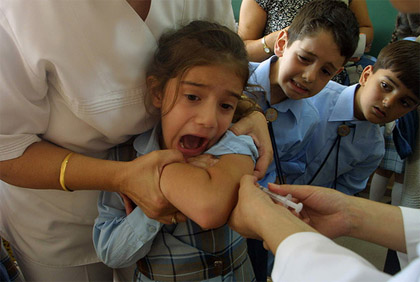
“Did you brush your teeth today ??”
I think you will ask this question to yourself & your family daily.
When you know that bad oral hygiene will drive you to heart disease, many of us may change his opinion.
Simply, people who don’t brush their teeth regularly will start with inflammation of their gums “Gingivitis“.
If this situation continues, a chronic inflammation occurs “Periodontal Disease“ with a bleeding gum.
Bleeding gum is a great risk factor, as it provides an entry to the blood stream for 700 different types of bacteria.
Streptococcus gordonii and Streptococcus sanguinis are two common infecting agents.
After they reach the blood stream, they bind with blood platelets, this creates two problems:
First: If we use an oral antibiotic to kill oral bacteria thus preventing them from reaching the blood stream, by time bacteria become resistant.
Second: The binding of bacteria with platelets encases them & shields bacteria from our immune system till they reach the heart causing heart diseases.
So, if we prevent the binding between bacteria & platelets, this will help our immune syst em kill bacteria & protect our heart. em kill bacteria & protect our heart.
“We are currently in the process of identifying the exact site at which the bacteria stick to the platelets” said Professor Howard Jenkinson. “Once this is identified we will design a new drug to prevent this interaction.”
Source: Bristol University news.
Image credits: Periodontal Disease
Image credits: Professor Howard Jenkinson
Tags: bleeding gum, Gingivitis, Heart Attack, Periodontal Disease, Streptococcus gordonii, Streptococcus sanguinis
 3 Comments »
 In a study conducted by researchers in the University of Maryland School of Medicine, physical activity has proved to counteract FTO gene “fat, mass, and obesity-associated gene” in a group of European descendants who resided in the USA, known as Old Order Amish. In a study conducted by researchers in the University of Maryland School of Medicine, physical activity has proved to counteract FTO gene “fat, mass, and obesity-associated gene” in a group of European descendants who resided in the USA, known as Old Order Amish.
FTO gene has recently been linked to obesity & increased BMI “Body Mass Index” in numerous studies. Europeans usually have one or two copies of a variation of this gene. The research has enforced this prior assumption but brought, yet, another advantage since the study was done on 704 men & women of similar descent and thus similar genetic makeup, which what makes them ideal for genetic research. This helped researchers study the effect of physical activity on the expression of this gene.
In subjects, who were physically active throughout their daily routine, having multiple copies of the FTO gene didn’t seem to affect their BMI, despite the fact that in those, who were less active, a link between their BMI and FTO gene was obvious. This suggests that the choices one has to make in everyday life can deeply impact our body’s response to its own genes.
In order to compare the different variations in this gene, subjects were asked to wear accelerometers to measure their body movement on a 24-hour basis for seven days. They were then classified accordingly in order to conduct a comparative analysis. The genetic analysis revealed that 26 SNPs in the FTO gene were linked to BMI.
In the future, this may help tailor methods to prevent obesity in genetically susceptible individuals. So, after all we can’t blame it on our genes. Our decisions might in fact make up who we are & who we will become.
Source: Medical News today
Original research paper: Physical Activity and the Association of Common FTO Gene Variants With Body Mass Index and Obesity. PMID: 18779467 (Vote for the abstract on Biowizard)
Image Source
Tags: accelerometer, Amish, BMI, fat, gene, gene variant, obesity, SNPs
1 Comment »
It is something like a dream, Marijuana, which is known in Egypt as “Hashish “, is used now as an antibiotic.
Marijuana is a herb planted in many countries as middle east eastern, Europe & Africa.
It is ingested by smoking, which quickly delivers active ingredients to the blood system. Marijuana has analgesic, anti-emetic, anti-inflammatory, sedative, anti-convulsive, and laxative actions.
Also, it is used in chemotherapy to relieve nausea & vomiting and for AIDS patients as stomachic.
Scientists tested five major active ingredients called cannabinoids on Different strains of MRSA “methicillin resistant Staphylococcus aureus“.
Both natural & synthetic cannabinoids show germ killing activity against MRSA.
These active ingredients exhibit antibacterial activity in a different way, meaning that they might be able to bypass bacterial resistance.
At least two cannabinoids “out of 5″ can be used safely without causing mood alteration.
MRSA like other Staphylococcus spread by contact, so people of close contact are of high danger.
Finally, researchers in the Journal of Natural Products call for the further study of antibacterial uses of marijuana as it is too difficult to find new antibacterials since unfortunately, bacteria became resistant to them.
Source : Web MD
Tags: bacteria, Cannabinoids, Hashish, Marijuana, methicillin resistant staphylococcus aureus, MRSA
4 Comments »
As we learned in pharmacology, the drug upon reaching the site of action, it gives a certain response. However, what if that response varies among individuals in terms of potency, duration or even adverse effects. As an example, in 1950s it has been noticed that Caucasians show prolonged effects to suxamethoniun chloride where further investigations revealed that 1 in every 3500 Caucasians has a less efficient butyryltranseferase, that metabolizes suxamethonium chloride, thus showing prolonged half-life & slower recovery from surgical paralysis. This fact has led to the emergence of a very unfavourable term “especially to clinicians”, Idiosyncrasy, which means the abnormal response to drugs, food & toxic agents that is peculiar to an individual. However, understanding the basic underlying mechanisms that led to this variation, made the scientists realize that in this case, the drug response is not only a matter of pharmacodynamic effects but is considered as a ring holding pharmacology at one side and the genetic make up (which is the DNA sequence of any protein dealing with the drug as receptors, carriers, metabolizing enzymes………, etc) at the other side. This understanding led the scientists to replace the old term of Idiosyncrasy with a better descriptive term known as pharmacogenetics.

image credit: www.medigenomix.de/
Variations in the genetic make up are diverse in types. The most common type is Single Nucleotide Polymorphisms (SNPs) which are single nucleotide substitutions that can be found in coding and non-coding regions in the DNA sequences of protein systems dealing with the drug. Another form of variation can be chromosomal aneuploidy as Trisomy, where an extra copy of a chromosome, carrying a gene coding for any protein system dealing with the drug, will in turn lead to response variation. As an example for that is in leukemic patients with down syndrome, since there is a third copy of chromosome 21 which bears Reduced folate Carrier gene that codes for the transmembrane Reduced Folate carrier system which is responsible for the of transport methotrexate inside the cell, thus having a third extra copy of this gene leads to the over expression of RFC & methotrexate toxicity due to high levels of intracellular methotrexate.
Now, with the fact that the genetic make up of an individual dictates the response has been laid down, the clinical application has become a consequent step. For example, regarding leukemic patients having down syndrome, as mentioned previously, they are highly predisposed to methotrexate toxicity & thus as a routine, these patients should be set on lower doses of methotrexate. This particular example is a little bit simple that is easily characterized by the well known phenotype of down syndrome patients. However, translating the basic knowledge of pharmacogenetics to useful clinical guidelines is a more complicated approach in terms of both characterizing the alteration in the genetic make up and the subsequent clinical decision regarding the choice of the drug, dose and the dosing schedule. For instance carrying out a SNP Genotyping for DNA sequencing and identification of SNPs is a difficult matter as SNPs are very scattered along the human genome, where it has been estimated that every 1,ooo base pair, one SNP is found. In addition, the functional characterization of this SNP on the protein level is a matter of complexity that requires well controlled studies (i.e. all other causes of response variation regarding the drug of interest are eliminated).

Inspite of the complexity of the investigations for clinical application, it is a productive promising approach that does have three positive impacts on the clinical application where upon the tailoring of the treatment protocol according to each patient genetic make up (individualized therapy), this will increase the efficiency of the medications, decrease side effects, adverse drug reactions, morbidities Image credit:& mortalities and thus reduce the finances of the clincal mangement of adverse drug reactions as well as toxicities that may be result from incompatibility of the drug with the genetic make up of the patient.
http://www.pharmacogeneticsinpsychiatry.com
Read the rest of this entry »
Tags: aneuploidy, Clinical application, functional characterization, Genetics, idiosyncrasy, pharmacogenetics, Reduced Folate Carrier, response variation, SNPs, suxamethonium chloride, trisomy
No Comments »
 In an on-going study at the University of Rochester Medical Center, scientists have come across a new form of inheritance which would probably astonish Mendel himself. Research has shown that parents pass on the human herpes virus 6 “HHV-6” to their offspring because the virus has integrated itself into the infected parent’s chromosomes. And it is actually not as odd as it sounds. One in every 116 newborns is affected by this unique congential infection. The virus appears to integrate itself into a position in the chromosome concerned with the maintenance of the body’s normal immune function. In an on-going study at the University of Rochester Medical Center, scientists have come across a new form of inheritance which would probably astonish Mendel himself. Research has shown that parents pass on the human herpes virus 6 “HHV-6” to their offspring because the virus has integrated itself into the infected parent’s chromosomes. And it is actually not as odd as it sounds. One in every 116 newborns is affected by this unique congential infection. The virus appears to integrate itself into a position in the chromosome concerned with the maintenance of the body’s normal immune function.
Typically, HHV-6 causes roseola which is characterized by high fever, rash, and mild gastrointestinal symptoms. However, the number of viruses found in children, who carry the virus within their genes, is much higher than those who were infected merely through the placenta. 86% of the children included in the study had the virus integrated within their chromosomes. The HHV-6 DNA itself was found in a hair sample provided by one of the parents. Only six of the congenitally infected babies were infected by the mother through the placenta.
The odd part about this does not lay in the fact that the virus has integrated itself within the chromosomes, but that it was actually passed on. So far, the long-term consequences on the children’s immune system is unknown but to have a virus lying around like that in their DNA…simply frightening, yet fascinating.
Source: Biology News Net
Press release: URMC website
Original research paper: Chromosomal integration of human herpesvirus 6 is the major mode of congenital human herpesvirus 6 infection. Pediatrics. 2008 Sep;122(3):513-20. PMID: 18762520. (Vote for the abstract on Biowizard)
Tags: chromosomal integration, family, HHV-6, inheritance, virus
6 Comments »
“It’s an honor to announce that we’ve successfully discovered, cloned & characterized the densonucleosis virus (DNV) Antigen, which will be able to infect Anopheles gambiae. That will hinder its ability to transmit Malaria parasite, Plasmodium or, at least, reduce its lifespan. I’ve to tell you this: This will be the latest in Malaria control.” Well.. those are my words but, of course, it is not my discovery. It’s the team of researchers from Johns Hopkins who discovered it. To realize how big it’s; we first need to know the previous approaches & trials in Malaria control.
To think, just think, about control/ prevention of any of those vector-borne parasites; automatically researchers think about these:
1- Prevent infection – disease – transmission.
2- By looking at: the parasite’s life cycle – the mosquito – the human immune system.
3- So, it’ll look like that: get humans vaccinated – develop genetically modified mosquitoes incapable of transmitting the parasite or simply “I was so naive to think that it’s simple” kill them with insecticides (anti-vector measures) – target the parasite at any stage of its life cycle.
For decades, DDT (dichloro-diphenyl-trichloroethane) & Chloroquine were successfully used in eradication of Anopheles & Plasmodium respectively, “I do like this word, makes me sound like a pro”. Chloroquine was used in treatment as well as prevention, till the emergence of chloroquine-resistant Plasmodium parasites and DDT-resistant Anopheles mosquitoes. Yes, they overcame the humans’ arsenal. So, preventing spread of resistant parasites is the #1 priority.
We can’t talk about all control strategies today, so we’ll talk about anti-vector measures. What do they use in control programs as anti-vector measures?
1- Insecticide-treated bednets (ITNs) & long-lasting ITNs (LLINs) it helped kids to survive. The only allowed insecticides to be used in ITNs are pyrethroid insecticides, so when the pyrethroid resistance emerged, as usual, it was really bad.
2- Indoor residual spraying (IRS) using DDT
One word about the mechanism of action of DDT & pyrethroids, both target voltage-gated Na-channels. So, when a set of mutations change the protein structure; Congratulations! It’s resistance to both DDT & pyrethroids.
3- New approach: Molecular talk; Know more about “blood meal” host selection. Yes, Anopheles smells the host, so researchers want to identify that pathway.
4- Another new approach: They are investigating genes which encode proteins that may interrupt the development of the parasite in the Anopheles.
The latest as an anti-vector measure is using Paratransgenesis or “the genetic manipulation of insect symbiotic (mutualistic, commensal or parasitic) microorganisms”, I can’t get the term or the definition. I’ll say it like that: “Any other m.o. has a relationship with the vector”. The steps are:
1- Know the Ag (Pick the gift)
2- Get the gene(s) engineered to be successfully expressed (Wrap the gift)
3- Delivery to Anopheles (Deliver the gift)
So the gift will be the non-enveloped ssDNA virus called (DNV). Its genome is very small, when they say for a viral genome that it’s small, so it has to be small (4–6 kb). The entire genome can be placed in a plasmid.
Back to the story of the discovery, they were doing a totally unrelated experiment when they found that strange band/ zone. They isolated it from the gel, cloned, sequenced, ran through BLAST which showed that it looks like DNV of Aedes aegypti (AeDNV) but not the man himself. They did multiple tests to identify the Ag, e.g. Immunofluorescence assay. There was a trial to infect Anopheles gambiae with DNV of Aedes aegypti which wasn’t successful in infecting adults from Anopheles gambiae. But the novel “AgDNV is highly infectious to An. gambiae larvae, disseminates to adult tissues, and is passed on to subsequent generations.”
Tags: AeDNV, AgDNV, anopheles gambiae, anti-vector measures, DDT, IRS, ITNs, malaria, paratransgenesis, plasmodium
No Comments »
 (image source) (image source)
Aetiology and epidemiology
Meninigococcal meninigits and septicemia are devastating diseases caused by Neissieria meningitidis. Although infants and young children are the most susceptible to the disease, adults are also affected but with less incidence. N.meningitidis is a gram negative capsulated bacterium that has been classified into five serogroups (A, B, C, Y, W135) based on their polysaccharide capsule.
The challenge
Over forty years, developing a vaccine against this dangerous bacterium proceeded with little success. In 1960, the purified polysaccharide antigens were used to develop a vaccine against four groups (A, C, Y, W135) . Unfortunately, this vaccine was highly effective in adults but didn’t give protection to young infants and children who represent the age group most susceptible to the disease. Another challenge is that this vaccine didn’t show success against serogroup B (known as:MenB).
More attempts to overcome the new challenge
Using capsular polysaccharide antigen, as a vaccine against MenB, wasn’t a very good idea. This is due to the fact that MenB capsular polysaccharide is highly similar (nearly identical) to N-acetyl neuraminic acid which is widely distributed in human tissue and that means it is a self antigen. The new vaccine was poorly immunogenic (and thus provide poor protection) and also it might elicit auto-antibodies.
As scientists never give up, they switched into the new trend in vaccinology: Reverse vaccinology. Due to the formerly mentioned, N.meningitidis was expected to be a very promising candidate for reverse vaccinology.
RV provides help
Using in silico technique (computational biology), the genome sequence was fed into a computer, 570 proteins of the bacterium surface were predicted. Going for more refinement, only 350 of these proteins were successfully expressed in E.coli and and used to immunise mice. The sera assays allowed the identification of certain proteins that elicit bactericidal antibodies and surprisingly, were conservative among different strains and this meets the criteria for a good vaccine.
Going forward
As research is proceeding to deprive our pathogen from enjoying its life inside our bodies, this work suggested further research of other pathogens such as: Streptococcus pneumoniae, Chlamydia pneumoniae, Bascillus anthracis, T.B and group B Streptococcus.
Reference:
A universal vaccine against serogroup B meningococcus.
Tags: meningitis, reverse vaccinology, vaccinology
5 Comments »
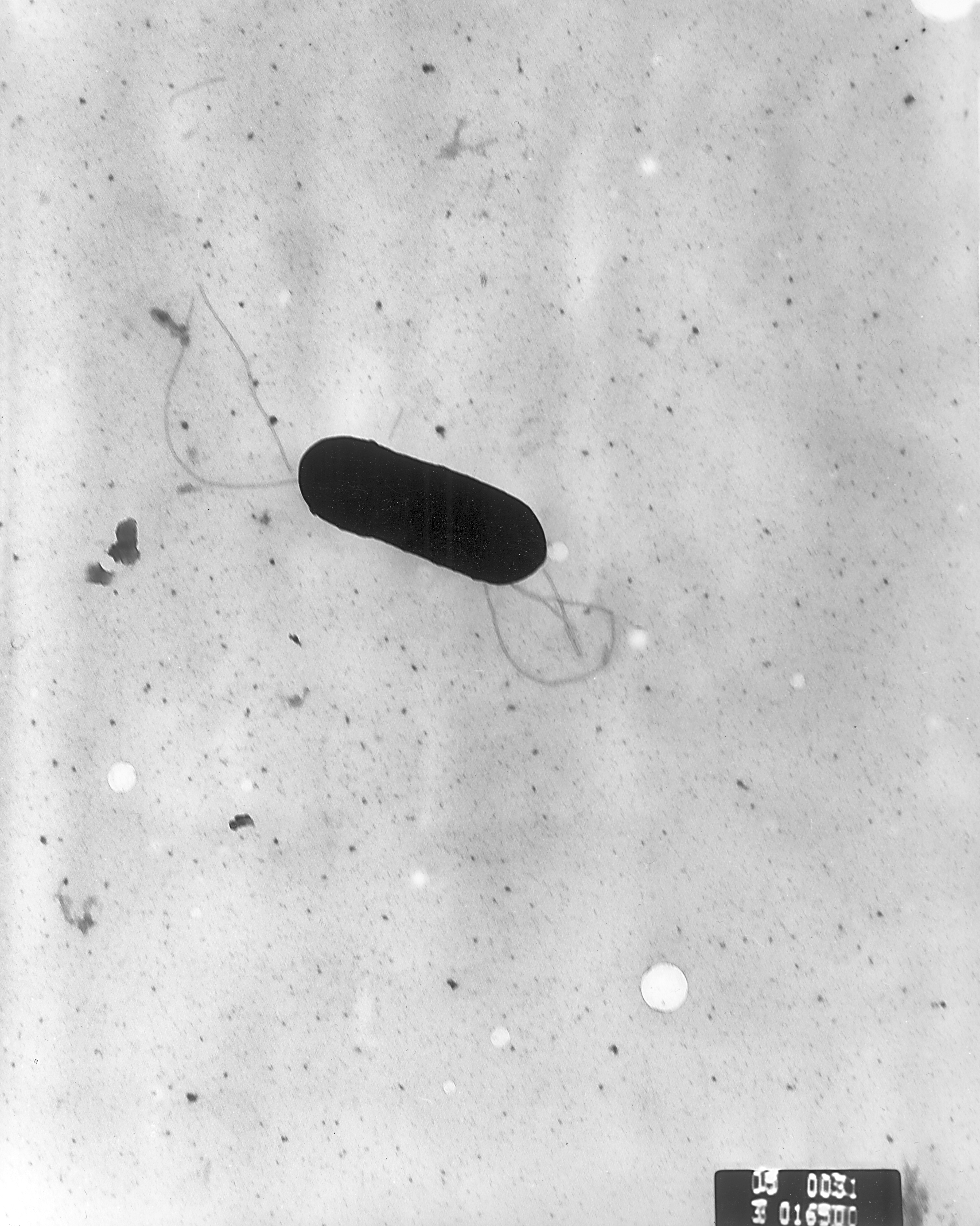 29 cases of listeriosis have been confirmed in Canada plus 31 suspected cases caused by an outbreak from contaminated meat. A local meat processing plant in Toronto has been blamed. Surely lawsuits have been pouring in after the plant was shut down & a massive recall of the meat products was done with an estimated price toll of 20 million dollars. 29 cases of listeriosis have been confirmed in Canada plus 31 suspected cases caused by an outbreak from contaminated meat. A local meat processing plant in Toronto has been blamed. Surely lawsuits have been pouring in after the plant was shut down & a massive recall of the meat products was done with an estimated price toll of 20 million dollars.
Listeria monocytogenes, a gram positive bacterium, penetrates the gastrointestinal epithelium & is engulfed by the host’s leukocytes. Its pathogenesis lays in the ability of the bacterium to grow and multiply within the host’s phagocytic cells. It is considered an important hazard in food industry.
Source: The Vancouver Sun
Tags: canada, food, listeriosis, meat
No Comments »
 Aethlon Medical has developed a new device called Hemopurifier® which acts a lot like the usual hemodialysis machine used in patients with end-stage renal disease but targets a different kind of particle within the blood, it captures viruses! The machine uses thin filters to capture & remove viruses from the blood. This requires an artery to act as an entry point of the blood to the machine, where it is filtered, and then sent back to the body, only cleaner. Aethlon Medical has developed a new device called Hemopurifier® which acts a lot like the usual hemodialysis machine used in patients with end-stage renal disease but targets a different kind of particle within the blood, it captures viruses! The machine uses thin filters to capture & remove viruses from the blood. This requires an artery to act as an entry point of the blood to the machine, where it is filtered, and then sent back to the body, only cleaner.
The whole blood circulation passes through the machine almost once every 8 minutes. The entire process itself requires a few hours. Needless to say, this might prove to be revolutionary in the treatment of all sorts of viral infections: measles, mumps, hepatitis, west-nile virus, smallpox, HIV, avian flu, even the seemingly harmless human flu..just to name a few.
The device has already received a lot of attention & was in fact awarded. In a pre-clinical study, an astonishing 99.4% of H5N1 flu virus, as verified by real-time PCR, was eliminated from the patient’s blood within an operating time of 6 hours.
This state-of-the-art device functions through using antibodies to capture viruses & toxins before their actual attack on the human organs. Patients can even be started on the machine before the physicians find out the cause of the disease.
Source: ScienceDaily
Tags: blood, H5N1, hemopurifier, HIV, immunotherapy, virus
10 Comments »
 The concept of self-sacrifice was discovered within the colonies of the Salmonella bacteria. Merely, a survival strategy. In normal cases, whenever the human body becomes infected by Salmonella, the body’s innate immunity represented in the gastrointestinal tissue barriers and normal commensal intestinal flora, literally fights back. The concept of self-sacrifice was discovered within the colonies of the Salmonella bacteria. Merely, a survival strategy. In normal cases, whenever the human body becomes infected by Salmonella, the body’s innate immunity represented in the gastrointestinal tissue barriers and normal commensal intestinal flora, literally fights back.
Fortunately enough for the bacteria, they have a way to tackle down this problem. Basically, they divide themselves in two groups, one ready to sacrifice itself for the well-being & the survival of the other. To elaborate more about this, the 1st group has the job of invading the tissues and thus triggering an inflammatory response which is basically a suicide. The 2nd group awaits for the chance of the inactivation of the normal flora & strikes an attack to find a paved smooth way for host infection.
Nothing in the genome dictates the fate of each specific bacterium since they are all members of the same bacterial colony. The difference in the bacterium’s behaviour within the host tissues is due to the random distribution of the cellular components between the two daughter cells.
This same scenario might also apply on a number of different of pathogenic bacteria. This might give us a closer look on the mechanism of bacterial infection & probably provide us with new ideas on how to tackle it.
Source: ScienceDaily
Tags: Salmonella, self-sacrifice, sociomicrobiology
2 Comments »
|


 Entries (RSS)