Archive for August, 2008
Mitochondria contain their own DNA which is about 17,000 bp. Mutation in mtDNA can lead to a series of disorders known as mitochondrial disorders which will be very vivid in organs requiring high energy supply as brain, heart, eye & skeletal muscles. Owing to its oxidative function, mitochondria are having a high rate of mutations estimated to be 10 times that of nuclear DNA . However, mitochondrial disorders result also from mutations in nuclear DNA in the regions coding for mitochondrial components . For individuals having mitochondrial disorders resulting from mtDNA mutations , they have a mixture of mutated mtDNA & normal mtDNA which is a pattern of distribution known as mitochondrial DNA heteroplasmy. The proportion as well as the distribution of defective mtDNA influence the location , onset as well as severity of diseases.

image credit: www.mrc-dunn.cam.ac.uk
Conventional treatment of mitochondrial disorders is mainly supportive where patients are treated with co-enzyme Q10, which is a cofactor required for electron transfer from complexes I & II to complex III. However Gene Therapy & Modern Targetting Systems stepped in offering a radical & permenant cure for mitochondrial disorders. One of most promising strategies of Gene Therapy is allotropic expression which involves the engineering of normal genes then their introduction to nucleus. This method showed success in a mitochondrial disorder characterized by respiratory deficient phenotypes caused by a mutant MATP8 gene , where the engineered ATP gene has succeeded in production of ATPase 8 protein.
Modern targetting systems have developed offering a unique solution to mitochondrial disorders & overcoming the dilemma of heteroplasmy as well. Cell membarne Crossing Oligopolymers (CMCO’s) are molecules that are capable of penetrating cell membrane & selectively bind to mutated mtDNA inhibiting its replication. This technique has been successful in handling Oxidative Phosphorylation deficiency (OXPHOS deficiency).
Tags: allotropic expression, CMCO's, heteroplasmy, mitochondria, mtDNA
 No Comments »
 For many decades, conventional vaccinology has faced many obstacles. One major problem is that among several antigens of the microbe, you have to identify the most immunogenic (and thus protective) antigens (such as virulent factors, toxins, surface-associated proteins, etc.) suitable for vaccine development. This process is very fastidious and costs a lot as it relies mainly on traditional biochemical and microbiological methods. As a summary, it is carried out as following: For many decades, conventional vaccinology has faced many obstacles. One major problem is that among several antigens of the microbe, you have to identify the most immunogenic (and thus protective) antigens (such as virulent factors, toxins, surface-associated proteins, etc.) suitable for vaccine development. This process is very fastidious and costs a lot as it relies mainly on traditional biochemical and microbiological methods. As a summary, it is carried out as following:
- Firstly, you have to cultivate the microbe and harvest proteins.
- Then you have to identify the antigens one by one.
- After that you can pass to vaccine development stage.
Introducing genomics has greatly contributed to providing a new impulse to vaccinology field. The major role it plays is in the antigen discovery stage. As the genome sequence of many microbes has been identified, the integration between the sequence, proteomics and microarray has introduced what is called “reverse vaccinology” . Reverse vaccinology (RV) means to identify and characterise the antigen using bioinformatics. In RV, you start from the genome and not from the pathogen itself i.e. you start from the opposite direction, that’s why it is called “reverse”.
RV will provide solutions to some problems that usually come up during vaccine development as:
- It will provide fast access to almost all antigens including:less common antigens and antigens not expressed in vitro.
- It represents a new approach for non culturable microorganisms.
On the other hand, the major disadvantage of RV is that it cannot be applied to non-proteinaceous antigens such as lipopolysaccharides and glycolipids.
Tags: GBS, genomics, reverse vaccinology, vaccinology
4 Comments »
 Posted by: Nehal in basics
“Mutations are the cause of almost every disease”. That is what a researcher told me when I asked her why we are very interested in studying mutations of the human DNA. Is that possible? Will the future medicine mainly depend on molecular genetics? Will each of us have his very specific genetic fingerprint included in his profile at his doctor? All those questions suddenly hit my thoughts when she continued to explain the huge impact of this new science on medicine.
You may say that if it’s mutation, we can simply “fix” it through gene therapy but still gene therapy is not approved by FDA and there are high risks and also considerable percentage of failure in this type of therapy. Well, I can tell you that this is not the only reason driving us to study gene mutations or mutations in general.
There were two old misconceptions (and may be still present). The first was that all diseases are only caused by environmental factors while the second was that congenital genetic diseases must be shown on parents. Studying mutations on DNA level proved that those are not necessarily true. Many widespread well-known diseases such as hypertension and also diabetes were recently known that they are of genetic origin. On the other hand, some cases of congenital mental retardation causes such as phenylketonuria (PKU) found in the newborn and not clearly shown in both parents.
There are also many good reasons why the interest in studying mutations raised lately. I can tell that one of them was the Human Genome Project. Since we can know most of the genes and we can easily get the sequence of any DNA sample, why don’t we study the “changes”? I think that’s the base of every science. We figure out the “normal” and then look up for the “abnormal”. Or, how can we be so sure about the “normal” unless we study the “abnormal”? That makes real sense to me.
She kept opening boxes, some I know and some I really didn’t know about. She also said that DNA analysis and sequencing is very important before marriage. Susceptibility of the expected child to some diseases (on the genetic level) may be also verified. Although it seems more of genetics but it’s true. Some mutations are inherited just following the Mendelian law. She gave me example; say that expected mother has mutation “deletion” in one of the genes while the expected father has mutation “insertion” in the same gene, the expected child may not be affected. On the other side, if both have deletion or insertion, there will be another pathway for this marriage.
On the prenatal level, we can actually save lives and avoid many complicated consequences that may happen. A sample from amniotic fluid or the pregnant mother blood (better to be the amniotic fluid), we can study how our fetus’s DNA is. If it is impossible to survive or it shall have tragedy in its life, legal abortion is carried out. If it is a milder case and the baby can survive for long period, we can maximize its opportunity as in the case of previously mentioned PKU. We know that certain types of food elements will enhance mental retardation; we can totally avoid them and guarantee a healthier happier life for both child and parents.
She emphasized on one thing I didn’t, previously, take care of; the diagnosis. She explained by saying that in many cases, especially cancer, we need to take a biopsy to send it to the pathology lab to say whether it’s benign or malignant. In prostate cancer for example, it’s more close to a surgery and we may be led to prostatectomy which is very painful whether physically or psychologically. Mutation analysis may save all that and provide us with non invasive method for diagnosis. ( I have to clarify that in some diseases, biopsy is better and more specific than blood sample for example, congenital heart diseases)
We all know that many diseases are multi-factorial which means that one thing happened leads to this and this leads to that and the same that causes another that..etc. So, it might be difficult tracking down the “single main factor” which was the first troublemaker. DNA can tell us about it. By detection of mutations, it may clarify what is the real reason of this dilemma. She opened a totally new box to me; unresponsiveness to the drug; the usual therapy not gene or any correction. I had a very small background about pharmacogenomics that sometimes we need to “tailor” the dose for every patient due to the fact that we are not simply the same. But, she gave me an additional interpretation to that shocking fact. Nephrotic syndrome is a disease caused by abnormality in the kidney mainly the glomeruli in the nephron; the functional unit of the kidney. It leads to many endless complications such as oedema and hypertension. One of the ways to treat it is steroids. Although it is a magical drug but it stabs us in the back. We can take the risk and treat the patient with steroids but it gives no effect. That’s due to mutation variation between different patients.
Going back to cancer, if one of the family members previously had cancer, it might be, with considerable percentage that it’ll be inherited to another family member. This also ensures the importance of studying our genes and how they “change”.
Not all mutations are that terrible. “If it weren’t for some mutations, we wouldn’t have survived”. One of my very respectful doctors told us that. I simply wouldn’t be writing you this post and you wouldn’t be reading it. There is no absolute. Everything has its good and bad side. The clever is who use the good and take care of the bad.
1 Comment »
 Two years ago, the project of sequencing the Neanderthal genome started. They (Max Planck Institute & 454 Life sequencing) promised to end by this year. Well, they kept their promise. Frankly, some mitochondrial DNA sequences (mtDNA) have been published but contamination was the major defect in those published sequences. They collected more than 60 bone specimens from museums (We’re talking about 38,000-year-old bone); they repeated the sequencing for 35 times in the same clean room of extraction to avoid contamination with human DNA. Two years ago, the project of sequencing the Neanderthal genome started. They (Max Planck Institute & 454 Life sequencing) promised to end by this year. Well, they kept their promise. Frankly, some mitochondrial DNA sequences (mtDNA) have been published but contamination was the major defect in those published sequences. They collected more than 60 bone specimens from museums (We’re talking about 38,000-year-old bone); they repeated the sequencing for 35 times in the same clean room of extraction to avoid contamination with human DNA.
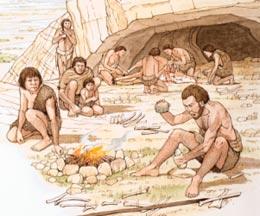
From the total 13 protein-encoding genes of the sequenced mtDNA, they identified only one with amino acids difference than the human sapien version. It is cytochrome c oxidase subunit 2 (COX2 – part of the respiratory chain), but even this difference has no significant effect on the functional domain of COX2. They hope to answer this questions in a few months: Why Neanderthals died out & human didn’t?!
We already know that Neanderthals & humans share 99.5% of the sequence, but answering questions about having a common ancestor & extinction through absorption (bred with humans) needs lots & lots of researches, collecting & sequencing samples at different time intervals to come with hypotheses. The mtDNA is not enough as Trinkaus (an expert on Neanderthal biology and human evolution) said: “The genome sequence data may tell us something about the selection of a couple of proteins, but it tells us nothing about language or social behavior.”
Image credits:
Reconstruction of a Neanderthal child from Gibraltar: http://en.wikipedia.org/
First complete Neanderthal genome sequenced: http://www.nature.com/
Tags: 454 pyrosequencing, genomics, human genome, human genome project, max planck institute, mtDNA, neanderthal
2 Comments »
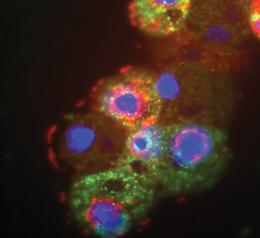 Once upon a time, in 2003, a French team discovered a giant virus infects amoeba. It was isolated from a cooling tower in the UK. They were so excited because it was so huge with a genome contains 900 protein-encoding genes (The words giant/ huge are totally hilarious. It’s not “Hulk”, it’s just a virus). It’s visible under the optical microscope. They named it Acanthamoeba polyphaga mimivirus (APMV). The prefix “mimi” is for mimicking microbe. Now, the same team “Raoult’s team” reported the isolation of another strain of those giant viruses but this time it was isolated from a cooling tower in Paris. They named it “mamavirus” because it was slightly larger than the previous giant virus (APMV), but it wasn’t alone. It was associated with its satellite, a small virus has 21 protein-encoding genes infects it, hijacks its viral factory making copies of itself, hindering the ability of the mamavirus to replicate/ make its own copies, so the number of the mamavirus drops in the infected amoebae. They named it Sputnik after the first man-made satellite. It’ll be the first isolated “Virophage”. How did I know about it? From the amazing blog of Dr. Ramy K. Aziz, “Microbes“. Once upon a time, in 2003, a French team discovered a giant virus infects amoeba. It was isolated from a cooling tower in the UK. They were so excited because it was so huge with a genome contains 900 protein-encoding genes (The words giant/ huge are totally hilarious. It’s not “Hulk”, it’s just a virus). It’s visible under the optical microscope. They named it Acanthamoeba polyphaga mimivirus (APMV). The prefix “mimi” is for mimicking microbe. Now, the same team “Raoult’s team” reported the isolation of another strain of those giant viruses but this time it was isolated from a cooling tower in Paris. They named it “mamavirus” because it was slightly larger than the previous giant virus (APMV), but it wasn’t alone. It was associated with its satellite, a small virus has 21 protein-encoding genes infects it, hijacks its viral factory making copies of itself, hindering the ability of the mamavirus to replicate/ make its own copies, so the number of the mamavirus drops in the infected amoebae. They named it Sputnik after the first man-made satellite. It’ll be the first isolated “Virophage”. How did I know about it? From the amazing blog of Dr. Ramy K. Aziz, “Microbes“.
The story won’t stop at this discovery. The discovery of the virophage will strongly suggest that “Viruses are alive” because they share something with other living domains of life, they can be infected, they can get sick, what makes all health-care providers totally thrilled because there’s something stronger than viruses which could be used to fight them, but “It’s too early to say we could use Sputnik as a weapon against big viruses or to modify them,” says co-author Bernard La Scola.
One more thing about Sputnik, 3 of its genes are closely related to APMV which suggests horizontal gene transfer between giant viruses caused by Sputnik. This is so “bacteriophagic”, reminds me with the whole insertion/ lysogenic mechanism between phages & bacteria. The isolated sequences from the ocean are closely related to the genome sequences of giant viruses & their satellite (Sputnik) . They infect plankton. “It suggests there are other representatives of this viral family out there in the environment,” Koonin says.
Image credits:
Giant mamavirus particles (red) and satellite viruses of mamavirus called Sputnik (green). http://www.nature.com/
Tags: APMV, horizontal gene transfer, mamavirus, sputnik, virophage
No Comments »
 Many drugs can’t do it, but GBS can! Many drugs can’t do it, but GBS can!
Bacterial meningitis is one of the leading causes of death and disability among childrens. Meningits occurs when bacteria cross blood brain barrier (BBB) after interacting with human Brain microvascular endothelial cells (hBMECs) . Although these cells are exhibiting tight junctions and lacking pinocytosis, some bacteria could cross it and this demonstrates an interplay between host cells and some bacterial factors.
Scientists at USCD school of medicine used a process involving generating and screening of many group B streptococcus (GBS) in tissue culture model of human BBB (consisting of immortalised hBMECs) . This culture maintained the normal function of human BBB.
They identified a gene called iagA gene encoding for a glycosyltransferase. A predicted product of the iagA glycosyltransferase is the glycolipid diglycosyldiacylglycerol involved in anchoring lipoteichoic acid (LTA) and consequently, enhances BBB invasion.
Allelic replacement of the iagA gene,so that the resulting mutants are lacking the gene, shed LTA into the media. As a result, mice infected with mutant gene exhibited less mortality rate -up to 90 percent- compared to wild-type infected mice. Mutant-type infected mice developed bacteremia as WT which proves the fact that iagA gene plays the central role in BBB invasion without significantly affecting adhesion or blood survival.
Since bacterial meningitis may cause infected children death or many complications as permanent cognitive deficits, blindness, deafness or seizures, an early treatment may help reduce high rates of death and disability.
This early treatment may be much more easily designed after these findings by blocking LTA anchoring on bacterial cell surface.This will help preventing meningitis even though bacteriemia has taken place.
The journal of clinical investigation has the full story.
Tags: drug targets, GBS, meningitis
No Comments »
As seen on Oprah :), a new state-of-the-art blood test “Biophysical250” is available for a price tag ranging from $1500-3400 that actually determines the length of your telomeres, and thus give doctors an idea of how a certain individual is aging.
What are telomeres?
The chromosomes are often compared to shoelaces and telomeres to the plastic wrapping found at both ends. They are repeated sequences of nucleotides whose function is to maintain the integrity of our genetic code while the cell is dividing. This is mainly because during DNA replication, primers don’t attach to the very end of the strand. Instead, they often ‘miss’ a few nucleotides on both ends and if that were the case, then our genetic code would eventually vanish. This is why telomeres are very important.
Normally, as human beings, our telomeres start off with 8,000 base pairs which decrease each time the cell divides by 30-200 bp each time and may go as low as 1,500 bp in elderly people. Eventually when telomeres become too short, the cell stops dividing, becoming inactive ‘aging’.
An interesting hypothesis about telomeres is that stress is thought to play some kind of role in the determination of their length. In other words, the more stressed out you are, the shorter your telomeres become as you age. Needless to say, once stress has been coped with, it is thought that the rate at which telomeres shorten decreases dramatically which might be essential to longer healthier lives.
For more information, click HERE
Tags: aging, chromosome, telomere
1 Comment »
I have to admit that it is pretty odd “or at least for me” to learn the countless aspects of life itself that we, as human beings, share with primitive organsims “as in bacteria”…& yet add another to the growing pile: The Concept of Hand-in-Hand
Helmholtz Centre for Infection Research
Rarely do bacteria grow as single cells, they rather prefer to grow as colonies which adhere to all kinds of surfaces forming “biofilms“. These biofilms have proved to be pretty effective in maintaining the well-being of the bacteria growing within them and needless to say, this possess a serious threat. Nothing seems to work with them, ranging from disinfectants and antibiotics all the way to our very own immune system.
Scientists, now, have identified a mechanism which is thought to be used by the bacteria, within the biofilm, to protect themselves. Pushing star wars aside, these biofilm bacteria are using chemical weapons as their defense.
Taking a model for this study, researchers compared marine bacteria getting attacked by amoebae to these biofilm bacteria getting attacked by phagocytes.
To take a closer look, these bacteria are easily attacked when they are swimming separately in the water, but once they are attached to a surface, the amoebae can no longer harm them. Not only that, but the amoebae were sometimes de-activated or even killed. A classic example of FIGHTING BACK!!
How do they do it?? Through chemical weapons.
Marine bacteria contain the pigment violacein. If the enemy attacks just a single cell, the pigment is released paralyzing and triggering a suicide mechanism in the amoebae.
Amoebae are thought to be the ancestors of some types of pathogens. So, instead of thinking of biofilms as a problem, they may be source of highly effective agents which can only be produced in a biofilm and can help us fight aganist some of these pathogens.
After all, it IS a small world
Tags: biofilm, chemicals, colony
2 Comments »
To be frank, I was really underestimating these bacteria. Streptococcus iniae, bacteria bothering fish, what’s the big deal? But when I read that it cause them meningoencephalitis due to systemic dissemination resulting in death, it made me sad. They’re fish, you know, they don’t deserve such destiny. (We can’t say that about eating them, right?) Back to scientific details, S. iniae was isolated from Amazon dolphins (Inia) but it has a very wide host range, it can infect fresh & saltwater species like salmon, yellowtail & hybrid striped bass (HSB). It also can infect immunocompromised as well as elders from humans.
S. iniae are beta-hemolytic streptococci, they have M protein (present in cell membrane) then the capsular polysaccharide which interfere with phagocytosis. They also have phosphoglucomutase which make their cell wall rigid & resistant to peptide antimicrobials, besides their streptolysin S. I’ve to tell you this, this iniae is a walking disaster, just like the human version S. pyogenes.
So what scientists tell us this time? Thanks to 454 pyrosequencing & bioinformatics, they identified extra virulence factors of S. iniae. Regulations in S. iniae are done through a Mga-like Mgx loci (multiple gene regulator of group A streptococci). It regulates the virulence factors. It’s used to be known that M-protein is a component of that Mga. This time, discovery of extra components takes place, the M-like surface protein (simA) & C5a peptidase (scpI). A word about scpI, its role is to inactivate C5a (the complement component) to hinder the complement reaction & also has a role in adhesion to epithelial cells.
Actually they’re looking forward to using the mutant delta-simA as a live attenuated vaccine against S. iniae. (Vaccine for fish?) They made mutations in both C5a-like peptidase & simA, apparently simA had the leading role in the virulence of the studied strain of S. iniae. So a new approach of vaccination will be developed instead of the old M protein vaccination strategy which requires multimeric vaccination (to provide protection against several serotypes) & showes autoimmune response. Unlike the ordinary M protein vaccination, vaccination with the mutant delta-simA will result in development of humoral as well as cell-mediated immunity.
Image credits:
Fish – Cartoon: http://www.robdoyle.co.uk/
Tags: 454 pyrosequencing, fish, HSB, hybrid striped bass, live attenuated, S. iniae, vaccinology
3 Comments »
|


 Entries (RSS)