Archive for August, 2008
 (image source) (image source)
Aetiology and epidemiology
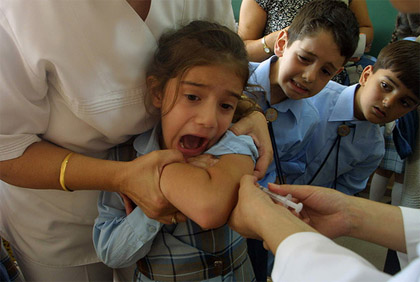
Meninigococcal meninigits and septicemia are devastating diseases caused by Neissieria meningitidis. Although infants and young children are the most susceptible to the disease, adults are also affected but with less incidence. N.meningitidis is a gram negative capsulated bacterium that has been classified into five serogroups (A, B, C, Y, W135) based on their polysaccharide capsule.
The challenge
Over forty years, developing a vaccine against this dangerous bacterium proceeded with little success. In 1960, the purified polysaccharide antigens were used to develop a vaccine against four groups (A, C, Y, W135) . Unfortunately, this vaccine was highly effective in adults but didn’t give protection to young infants and children who represent the age group most susceptible to the disease. Another challenge is that this vaccine didn’t show success against serogroup B (known as:MenB).
More attempts to overcome the new challenge
Using capsular polysaccharide antigen, as a vaccine against MenB, wasn’t a very good idea. This is due to the fact that MenB capsular polysaccharide is highly similar (nearly identical) to N-acetyl neuraminic acid which is widely distributed in human tissue and that means it is a self antigen. The new vaccine was poorly immunogenic (and thus provide poor protection) and also it might elicit auto-antibodies.
As scientists never give up, they switched into the new trend in vaccinology: Reverse vaccinology. Due to the formerly mentioned, N.meningitidis was expected to be a very promising candidate for reverse vaccinology.
RV provides help
Using in silico technique (computational biology), the genome sequence was fed into a computer, 570 proteins of the bacterium surface were predicted. Going for more refinement, only 350 of these proteins were successfully expressed in E.coli and and used to immunise mice. The sera assays allowed the identification of certain proteins that elicit bactericidal antibodies and surprisingly, were conservative among different strains and this meets the criteria for a good vaccine.
Going forward
As research is proceeding to deprive our pathogen from enjoying its life inside our bodies, this work suggested further research of other pathogens such as: Streptococcus pneumoniae, Chlamydia pneumoniae, Bascillus anthracis, T.B and group B Streptococcus.
Reference:
A universal vaccine against serogroup B meningococcus.
Tags: meningitis, reverse vaccinology, vaccinology
 5 Comments »
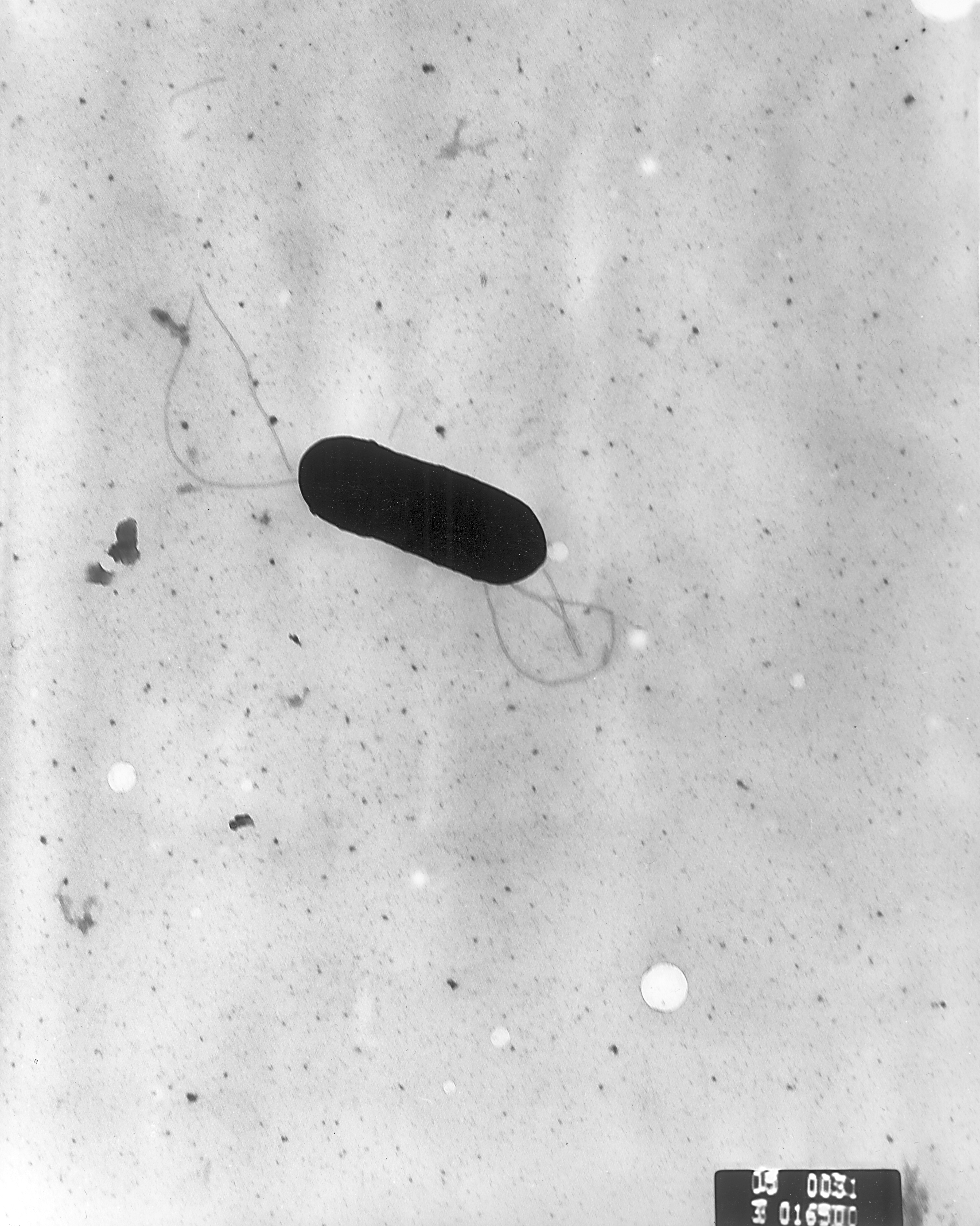 29 cases of listeriosis have been confirmed in Canada plus 31 suspected cases caused by an outbreak from contaminated meat. A local meat processing plant in Toronto has been blamed. Surely lawsuits have been pouring in after the plant was shut down & a massive recall of the meat products was done with an estimated price toll of 20 million dollars. 29 cases of listeriosis have been confirmed in Canada plus 31 suspected cases caused by an outbreak from contaminated meat. A local meat processing plant in Toronto has been blamed. Surely lawsuits have been pouring in after the plant was shut down & a massive recall of the meat products was done with an estimated price toll of 20 million dollars.
Listeria monocytogenes, a gram positive bacterium, penetrates the gastrointestinal epithelium & is engulfed by the host’s leukocytes. Its pathogenesis lays in the ability of the bacterium to grow and multiply within the host’s phagocytic cells. It is considered an important hazard in food industry.
Source: The Vancouver Sun
Tags: canada, food, listeriosis, meat
No Comments »
 Aethlon Medical has developed a new device called Hemopurifier® which acts a lot like the usual hemodialysis machine used in patients with end-stage renal disease but targets a different kind of particle within the blood, it captures viruses! The machine uses thin filters to capture & remove viruses from the blood. This requires an artery to act as an entry point of the blood to the machine, where it is filtered, and then sent back to the body, only cleaner. Aethlon Medical has developed a new device called Hemopurifier® which acts a lot like the usual hemodialysis machine used in patients with end-stage renal disease but targets a different kind of particle within the blood, it captures viruses! The machine uses thin filters to capture & remove viruses from the blood. This requires an artery to act as an entry point of the blood to the machine, where it is filtered, and then sent back to the body, only cleaner.
The whole blood circulation passes through the machine almost once every 8 minutes. The entire process itself requires a few hours. Needless to say, this might prove to be revolutionary in the treatment of all sorts of viral infections: measles, mumps, hepatitis, west-nile virus, smallpox, HIV, avian flu, even the seemingly harmless human flu..just to name a few.
The device has already received a lot of attention & was in fact awarded. In a pre-clinical study, an astonishing 99.4% of H5N1 flu virus, as verified by real-time PCR, was eliminated from the patient’s blood within an operating time of 6 hours.
This state-of-the-art device functions through using antibodies to capture viruses & toxins before their actual attack on the human organs. Patients can even be started on the machine before the physicians find out the cause of the disease.
Source: ScienceDaily
Tags: blood, H5N1, hemopurifier, HIV, immunotherapy, virus
10 Comments »
 The concept of self-sacrifice was discovered within the colonies of the Salmonella bacteria. Merely, a survival strategy. In normal cases, whenever the human body becomes infected by Salmonella, the body’s innate immunity represented in the gastrointestinal tissue barriers and normal commensal intestinal flora, literally fights back. The concept of self-sacrifice was discovered within the colonies of the Salmonella bacteria. Merely, a survival strategy. In normal cases, whenever the human body becomes infected by Salmonella, the body’s innate immunity represented in the gastrointestinal tissue barriers and normal commensal intestinal flora, literally fights back.
Fortunately enough for the bacteria, they have a way to tackle down this problem. Basically, they divide themselves in two groups, one ready to sacrifice itself for the well-being & the survival of the other. To elaborate more about this, the 1st group has the job of invading the tissues and thus triggering an inflammatory response which is basically a suicide. The 2nd group awaits for the chance of the inactivation of the normal flora & strikes an attack to find a paved smooth way for host infection.
Nothing in the genome dictates the fate of each specific bacterium since they are all members of the same bacterial colony. The difference in the bacterium’s behaviour within the host tissues is due to the random distribution of the cellular components between the two daughter cells.
This same scenario might also apply on a number of different of pathogenic bacteria. This might give us a closer look on the mechanism of bacterial infection & probably provide us with new ideas on how to tackle it.
Source: ScienceDaily
Tags: Salmonella, self-sacrifice, sociomicrobiology
2 Comments »
You may remember HBV, the famous hepatitis virus with its partially double-stranded circular DNA genome. I always wondered: What is that supposed to mean?! HBV has a very complicated replication cycle. I’m pretty sure that all molecular biology fans will be totally thrilled by reading this.
HBV replication cycle is divided into 3 stages:
1- The infectious virion containing the partially double-stranded circular DNA, they call it RC-DNA (relaxed circular).
2- Right after the infection, inside the host nucleus, the genome becomes cccDNA (covalently closed circular DNA). It looks just like plasmids. HBV needs that highly stable form because it’s a chronic infection; it doesn’t want to be lost during host cell division. It may be still there in the host cells even after effective antiviral therapy.
3- Finally transcription takes place, several RNA molecules are produced, some of them are genomic (contain the whole genome) named pgRNA (pregenomic RNA) & some are subgenomic (encode needed enzymes) It uses the cell’s RNA polymerase II to do all this.

So, what happens to the pgRNA? They get inside progeny capsids ready to be reverse transcribed with the help of P protein (Its reverse transcriptase) which is “co-packed” in the pgRNA- progeny capsid package to get it back to the RC-DNA. Then the mature RC-DNA containing-nucleocapsids could undergo cccDNA amplification, or could be enveloped & ready for release from the cell. Of course all this is in equilibrium; if there’s only one copy in the cell, the priority is not to make cccDNA but to be enveloped & released.
Why the RC-DNA needs to be first cccDNA before transcription? As I got from this review, the RC-DNA has the normal (-)-strand (opposite sense to mRNA) but its complementary, the (+)-DNA strand, is not in full length. It results from the non-identical nucleotides supply; because the envelop is impermeable to nucleotides. At the 5′ end of the (-)-strand, there’s the P protein. But at the 5′ end of the (+)-strand, there’s some RNA nucleotides remains from the pgRNA…It was its primer, remember? All these are removed to be a cccDNA. The P protein may has a role in completing the (+)-strand.
Image credits:
Hepatitis B Virus Replication: http://www.meds.com/
Tags: cccDNA, HBV, P protein, pgRNA, RC-DNA, reverse transcription
No Comments »
 Scientists have found out that alligator blood is able to fight different kinds of bacteria including even MRSA “Methicillin-Resistant Staphylococcus aureus“. This is due to the presence of several peptides within the alligator’s blood which pose as a natural barrier against bacterial infection. This particularly comes in handy since alligators are known to live in conditions very preferrable for the growth of microorganisms, mainly in swamps to be exact. Scientists have found out that alligator blood is able to fight different kinds of bacteria including even MRSA “Methicillin-Resistant Staphylococcus aureus“. This is due to the presence of several peptides within the alligator’s blood which pose as a natural barrier against bacterial infection. This particularly comes in handy since alligators are known to live in conditions very preferrable for the growth of microorganisms, mainly in swamps to be exact.
The idea first struck Dr. Mark Merchant when he noticed that despite of their habitat, alligators seem to strive quite normally with scratches & bruises in their skin. Researchers then isolated an alligator’s serum & did a comparative analysis against human serum. Out of 23 strains of bacteria, human serum was able to conquer only eight, while that of the alligator’s stood undefeated against all 23. Not just that, but the serum was also tested on HIV & surprisingly, a great amount of the virus was also destroyed.
Surely, the benefit of this discovery would arise once those peptides are sequenced & their exact chemical structure identified to manufacture them in labs as it would be pretty unreasonable in terms of animal rights AND cost-wise to slaughter alligators for their blood.
Drugs containing these peptides are expected to become available within the next 8-10 years & would definitely prove very useful for patients highly vulnerable to infections as in certain autoimmune diseases, diabetes, burn victims and those with open surgical wounds.
Tags: alligator, animal rights, bacteria, serum
No Comments »
Scientists are harvesting all of them potatoes for an investigational experiment is being done on patients with Alzheimer’s disease using protein extracts obtained from a potato virus.
Alzheimer’s is associated mainly with amyloid plaque within the neurons of the brain. A major portion is formed of beta amyloid which should, in normal cases, break down on its own but rather tends to accumulate forming the insoluble hard plaque. Here is where the potatoes pitch in.
A fairly known potato virus “PVY“, basically harmless to humans, which I & probably you might have been previously exposed to, contains an amyloid-like protein. Through isolating the potato virus & injecting it in experimental animals with booster doses every month, the levels of antibodies against the protein, in 4 months, quickly rose to an extent that allowed these animals to successfully fight the formation of beta amyloid plaques, a contributing factor in the progression of Alzheimer’s disease.
Surprisingly, the mice also developed AD antibodies even when given PVY-infected potato leaves. Research on human subjects has been postponed for fear of the development of autoimmune encephalitis, although the early trials have been very promising.
Hopefully, this debate will soon be over once a purified version of the virus safe enough for human use is prepared & tested on these patients. Might be just a new ‘awakening’ 🙂
Tags: alzheimer's, amyloid, food, potato
2 Comments »
What could the two possibly have in common? Surprisingly, deep within the human genetic code, researchers have discovered a previously un-noticed gene that encodes a DNA-binding protein which closely resembles proteins produced by archaea bacteria. The gene, named hSSB1, was cloned to obtain sufficient  amounts of the protein for analysis. amounts of the protein for analysis.
Studies have shown that this protein attaches to single stranded pieces of DNA. “Red marks shown in the picture indicate areas of attachment to the DNA”. Furthermore, it activates the production of other proteins which indicate the occurence of damage in that specific area of the genetic material. Cells deficient in this gene are more liable to DNA damage & eventually die at a faster rate.
Now, researchers are faced with the challenge of understanding the exact mechanism of how it signals the damage of the DNA & determining the roles, if any do exist, in the development of cancer.
Tags: archaea, DNA, hSSB1 gene
No Comments »
 In a new twist of events, aided by small tailor-made pieces of RNA, scientists have been able to successfully lower the levels of “bad” cholesterol in pre-clinical trials by two-thirds using single doses of siRNA. In a new twist of events, aided by small tailor-made pieces of RNA, scientists have been able to successfully lower the levels of “bad” cholesterol in pre-clinical trials by two-thirds using single doses of siRNA.
Researchers have studied people with mutations in the PCSK9 gene “short for proprotein convertase subtilsin/kexin type 9” which is responsible for the production of a protein that raises the level of LDL & have found that they are less prone to hypercholesterolemia & other cardiovascular-associated disorders. In fact, they are 28% less liable to develop coronary heart diseases.
Therefore, eliminating the production of this protein is beneficial for patients suffering from high levels of blood cholesterol. In order to achieve this, little pieces of designer siRNAs were designed which attach upon the cell’s mRNA and put an end to the process of protein translation.
These trials have been performed on mice and rats that have been genetically altered to produce normal human PCSK9 protein end product.
In addition, non-human primates were also included where they showed an average of 56% reduction in cholesterol level, with one of them showing a surprising 70% reduction.
It is worthy to say that drugs available now in the market have only proved successful when taken at maximum doses over prolonged periods of time & showed only 20-50% drop in LDL cholesterol. This opens up a new horizon for patients who have not responded to conventional drug therapy or may be used in combination with the existing medication to produce more promising results.
Tags: cholesterol, PCSK9 gene, siRNA
No Comments »
Many genes have the same function whether they are inherited from the father or the mother. However, few genes are active only when they are inherited from mother & others are active only when they are inherited from father. This fact makes us raise our hands with a few questions: when we recieve genes of same function from both parents, which one’s action will predominate? and what are the basis of this selective predomination of action? Here comes the rule of what is known as “Genetic imprinting” where certain genes inherited from a certain parent will be silenced by an epigenetic mechanism rendering them inactive. This process happens mainly during the development of gametes.
The fraction of imprinted genes in the human genome is still unknown, however studies refer that 10%-25% of mouse genome is imprinted.
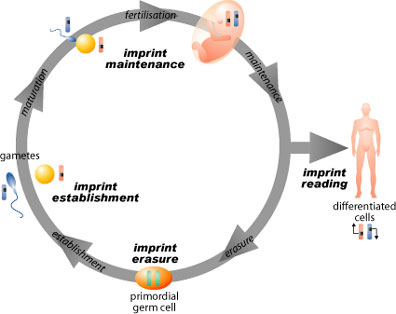
image credit:
www.bioteach.ubc.ca
Imprinted genes are localized in certain clusters in the genome where the whole cluster is silenced by methylation through certain methylases that act mainly by addition of methyl group to cytosine of spesific CpG dinucleotides within the clusters, so reducing the expression of the rest of genes in the clusters. However, Genetic imprinting is liable to modification along generations, for example if a male recieved imprinted genes from his mother, if it happens that this male will have a daughter, these imprinted genes he recieved from his mother will be activated by another process known as acetylation, where acetylated genes are actively tarnscribed. Thus, whether genes are imprinted or not depends only whether they came from a mother or father & is not a trait being passed through generations ( i.e. Non Mendelian pattern of inheritance). Diseases and developmental disorders are associated mainly when ceratin genes fail to be imprinted. Cancers have deen correlated with failure to imprint growth factors.
Tags: acetylation, Genetic, Imprinting, methylation, non mendelian
2 Comments »
|


 Entries (RSS)